
Thermally Modified Wood — once a niche European innovation — has reached a level of performance, consistency, and sustainability that makes it one of the most important natural building materials of the decade. And for the first time, it’s being produced right here in our region.
Technology That Transforms Wood at Its Core
Thermally Modified Wood (TMW) is not simply kiln‑dried wood. It is wood that has been fundamentally transformed at the cellular level through a precisely controlled, oxygen‑reduced heat process. Moisture is driven out, hemicelluloses break down, and the cell walls partially fuse — permanently improving how the wood behaves.
The results are significant:
- Moisture content drops to 5–7%
- Dimensional stability improves by up to 50%
- Durability reaches Class 1–2 (EN 350)
- Swelling and shrinking reduce by 30–80%
- Thermal insulation improves by 20–25%
These are deep, irreversible changes that make TM wood more stable, more durable, and more predictable than traditional softwoods.
Why This Is a Breakthrough for Builders
The construction industry has long needed a natural material that performs better without relying on chemicals or tropical hardwoods. TM wood delivers exactly that.
Compared to cedar, TM wood offers:
- Longer lifespan (25–35+ years above ground)
- Superior decay resistance
- Minimal maintenance
- Better insulation
- Far less movement
- A lower environmental footprint
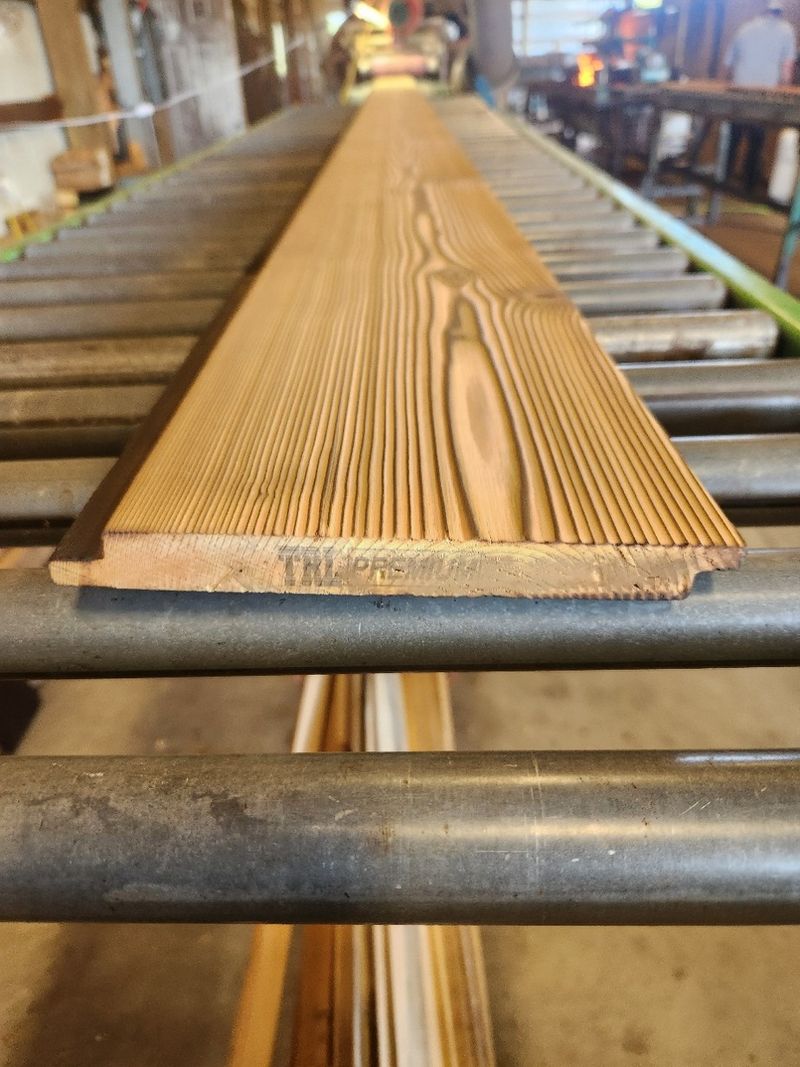
This isn’t a small improvement — it’s a major leap forward.
Built for the Northwest’s Climate
The Northwest’s wet winters, dry summers, and UV exposure challenge even the best traditional softwoods. TM wood thrives in these conditions. It moves less, absorbs less moisture, holds finishes longer, and stays straighter over time. For builders, it solves problems that have existed for decades.
A Sustainable Alternative to Tropical Hardwoods
TM wood achieves durability comparable to teak and other tropical hardwoods — but without the ecological cost. It is locally sourced, chemical‑free, carbon‑efficient, safe to handle, and long‑lasting. Few materials improve performance and sustainability at the same time. TM wood does both.
Big Cabin’s Role: Bringing TM Wood Home
Big Cabin is one of the only companies in the Northwest operating a fully local, vertically integrated TM wood process — from regional timber to finished product.
This means:
- Reliable local supply
- Custom sizes rarely available elsewhere
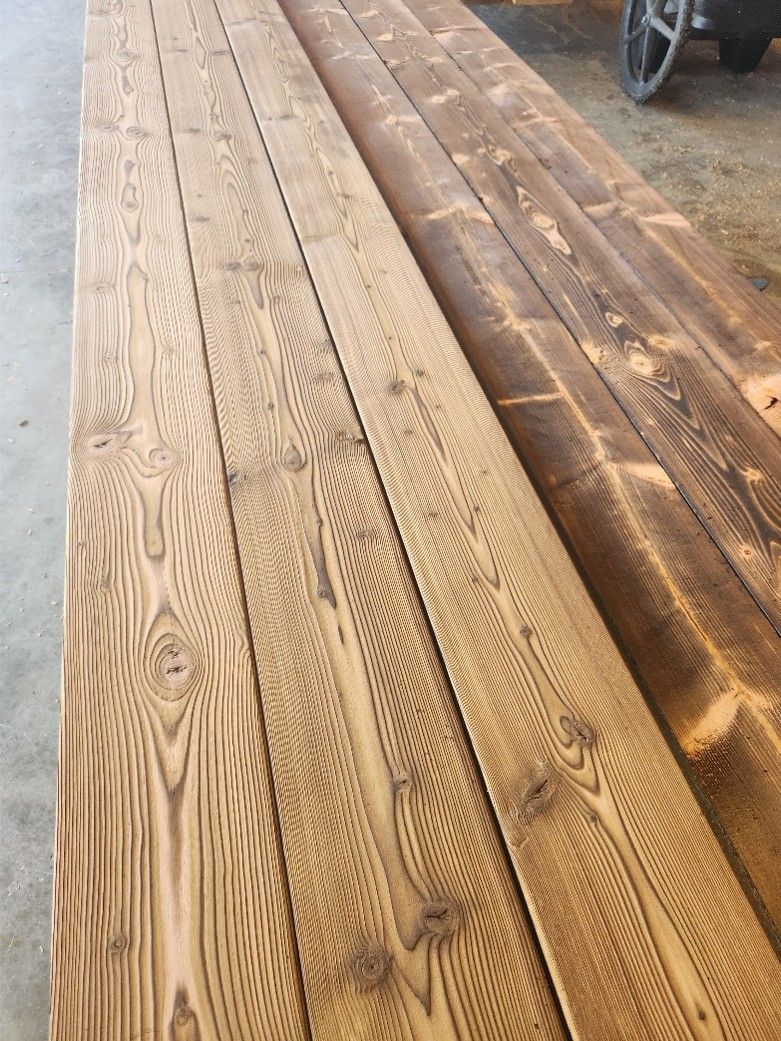
- A cedar‑like appearance with superior longevity
- A 20‑year guarantee at a comparable price
Why Thermally Modified Wood Is the Next Big Thing
Builders need stability. Homeowners need longevity. Architects need sustainability. The industry needs dependable regional supply. TM wood delivers all of it.
It improves performance, reduces maintenance, enhances beauty, and strengthens environmental responsibility — all at once.
Thermally Modified Wood isn’t just an upgrade. It’s a breakthrough. And it’s here.

Project Management
Lead Designer & CAD Technician
After graduating with a Master's Degree in Wood Engineering, Milan started his career by traveling abroad to apprentice with Brian Schafer, Principal of Big Cabin. As an expert in the industry for over a decade now, his passion for log and timber home construction grew deeply throughout his career and ingrained his knowledge of drafting, project management, and roofing design.