
Slow Char Rate, Strong Core
When exposed to fire, a log doesn’t burn through quickly. Instead, the outer surface forms a char layer — a protective shell of carbon that slows further burning. This char insulates the inner wood, dramatically reducing heat penetration and helping the log maintain structural integrity for a long time.
This slow, predictable burn rate has a major real‑world benefit: it gives occupants significantly more time to react, prepare, and evacuate safely. This is one of the most important advantages of high‑mass timber compared to lightweight construction, which can fail rapidly once flames reach structural members.
In contrast, small‑dimension lumber (like 2×4 or 2×6 framing) has very little mass. It heats up quickly, burns rapidly, and loses strength early in a fire event. A log wall behaves more like heavy timber beams used in commercial buildings: slow to ignite, slow to fail, and structurally stable for extended periods.
What Houdek’s Research Shows
Fire‑resistance testing by Dalibor Houdek, Ph.D., demonstrated just how resilient scribe‑fit log walls are under extreme fire exposure. In his controlled furnace tests:
- The exposed face of the log wall reached temperatures over 1,000°C.
- The unexposed interior side remained remarkably cool — around 32–95°C, depending on the test.
- The wall maintained structural integrity for one hour or more without any gypsum board or added protection.
One of Houdek’s most important observations was that no smoke penetrated the interior side of the wall during the test period. This is a critical safety factor: smoke inhalation is responsible for the majority of fire‑related fatalities. A wall system that delays smoke entry gives occupants a safer environment and more time to act.
Houdek’s work confirms what log builders have known for decades: massive log walls are inherently fire‑resistant, and their performance is both measurable and reliable.
Mass Matters
The sheer size of handcrafted logs gives them a natural advantage. Large logs absorb heat without reaching critical failure temperatures as quickly as thin materials. Their thermal mass slows the progression of fire and helps maintain stability even under prolonged exposure.
This means that in many fire scenarios, a log home’s walls remain standing long after lightweight structures have collapsed.
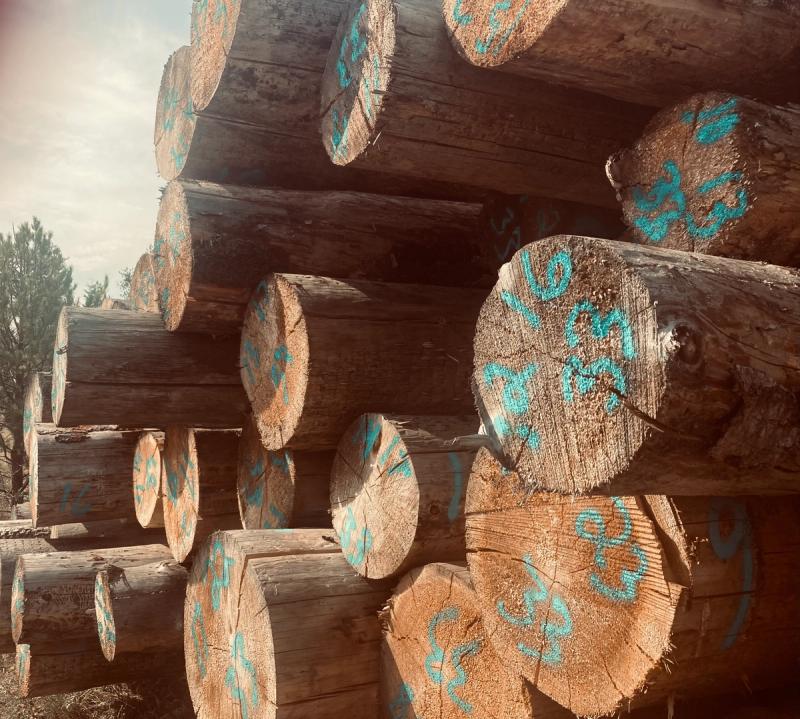
Real‑World Resilience
Across North America and other fire‑prone regions, there are numerous examples of log homes surviving wildfires that destroyed neighbouring conventional houses. While no building is fire‑proof, the combination of mass, slow char rate, and structural redundancy gives log homes a measurable edge.
Even when the exterior surface chars, the underlying structure often remains intact and repairable — something rarely possible with framed walls.
Design Features That Improve Fire Performance
While the logs themselves offer strong fire resistance, thoughtful design enhances safety even further:
- Metal roofing reduces ignition risk from embers.
- Generous roof overhangs help protect walls from radiant heat.
- Proper site planning — clearing vegetation and maintaining defensible space — significantly improves fire resilience.
- High‑quality joinery ensures tight fits that limit air movement, reducing the spread of flames.
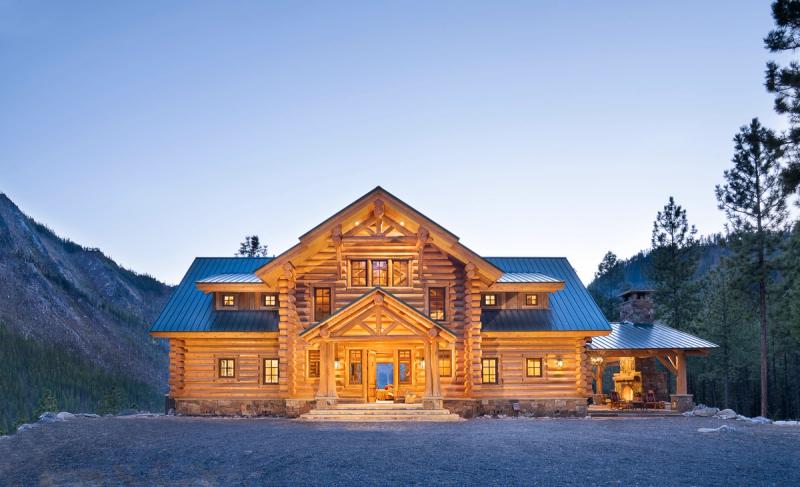
These are all standard considerations in well‑designed log homes, and they complement the natural fire performance of solid timber.
Building Codes and Classification
Many building codes classify log homes similarly to heavy timber construction, recognising their predictable fire behaviour. This can simplify compliance and, in some cases, improve insurance outcomes. The key is the diameter and mass of the logs — something handcrafted log builders like Big Cabin excel at.
A Safer, More Resilient Way to Build
Fire behaviour is complex, but the science is clear: large‑diameter logs perform exceptionally well under fire exposure. Their slow char rate, structural stability, and natural insulating properties make log homes one of the most resilient building systems available.
And as Houdek’s research shows, the benefits go beyond structural endurance: slow burning and delayed smoke penetration give occupants valuable time — often the most important factor in fire safety.
In a world where safety and durability matter more than ever, solid wood construction offers a reassuring advantage — one rooted in nature, proven by engineering, and strengthened by craftsmanship.

Project Management
Lead Designer & CAD Technician
After graduating with a Master's Degree in Wood Engineering, Milan started his career by traveling abroad to apprentice with Brian Schafer, Principal of Big Cabin. As an expert in the industry for over a decade now, his passion for log and timber home construction grew deeply throughout his career and ingrained his knowledge of drafting, project management, and roofing design.